
Blood Gold, Broken Lands: Environmental and Climate Justice Defenders in Milxo, Somalia
A Report by the African Academy of Diplomacy (AAD)
September 22, 2026
Executive Summary
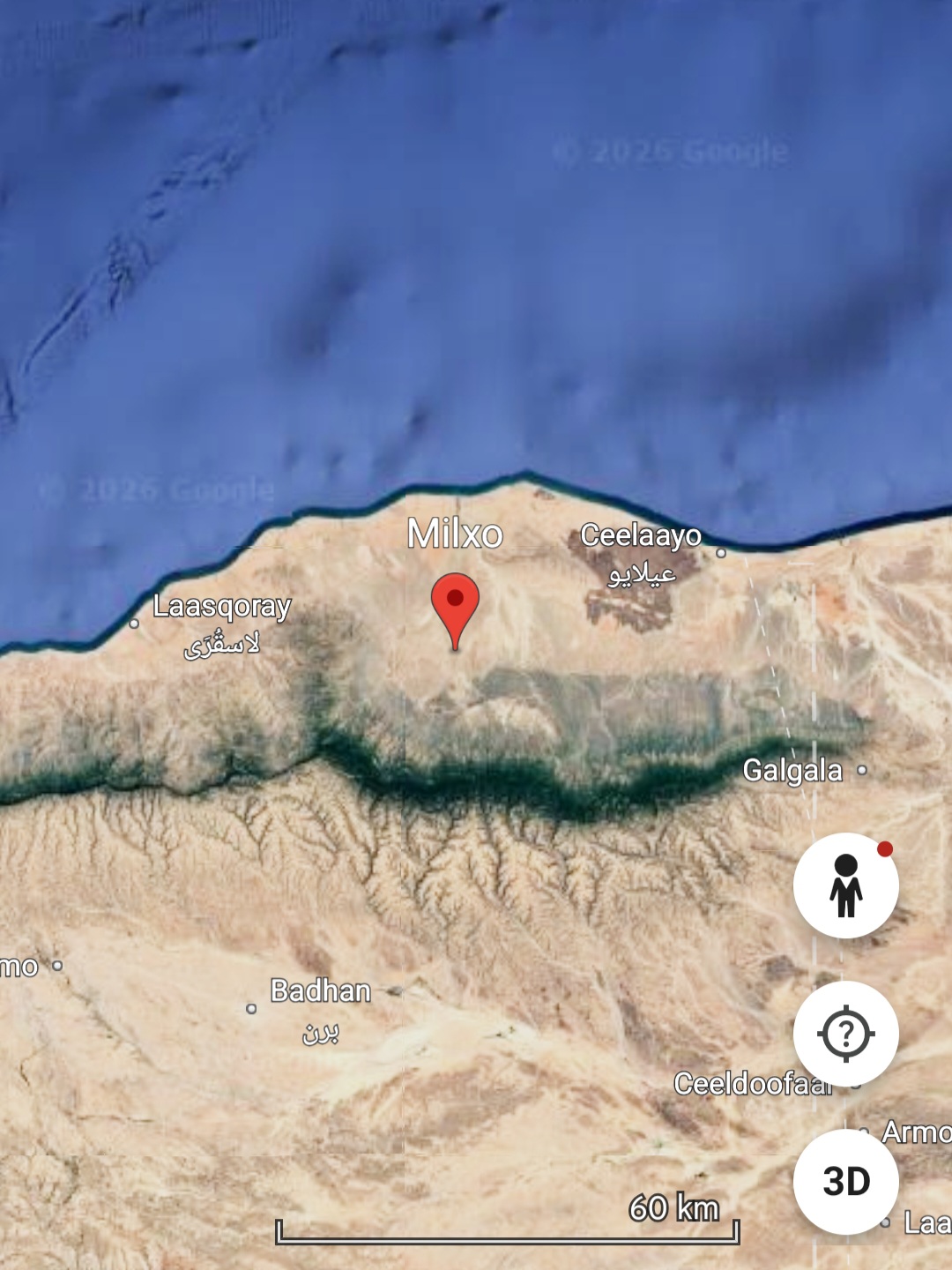
The African Academy of Diplomacy (AAD) new report raises urgent concern over the environmental, social and human-rights consequences of increasingly intensive and poorly regulated gold-mining activities in Milxo, Puntland region, Somalia.
Milxo has developed into a major gold-mining hub in northern Somalia. Research by the Global Initiative Against Transnational Organized Crime (GI-TOC) found that the area has grown rapidly while operating in a context of weak regulatory oversight. Its research identified extensive mining activity, environmental risks and international gold flows, with Somali gold flowing predominantly to Dubai. Official UAE imports of Somali gold increased from 2.8 tonnes in 2017 to more than five tonnes in 2023.
CSHRD has also received reports referring to approximately five tonnes of gold being harvested from the Milxo area and entering UAE-linked markets in 2025. This 2025 figure requires further independent verification and should not be presented as an established official production statistic. The independently verified international reporting currently available establishes the UAE import figure for 2023, rather than a verified five-tonne Milxo production figure for 2025.
The environmental consequences documented by CSHRD include destruction of vegetation and natural habitats, land degradation, damage to grazing areas, deterioration of water sources, biodiversity loss and increasing pressure on pastoral livelihoods.
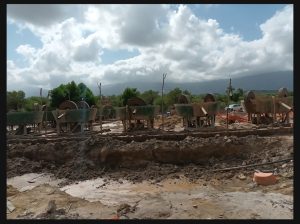
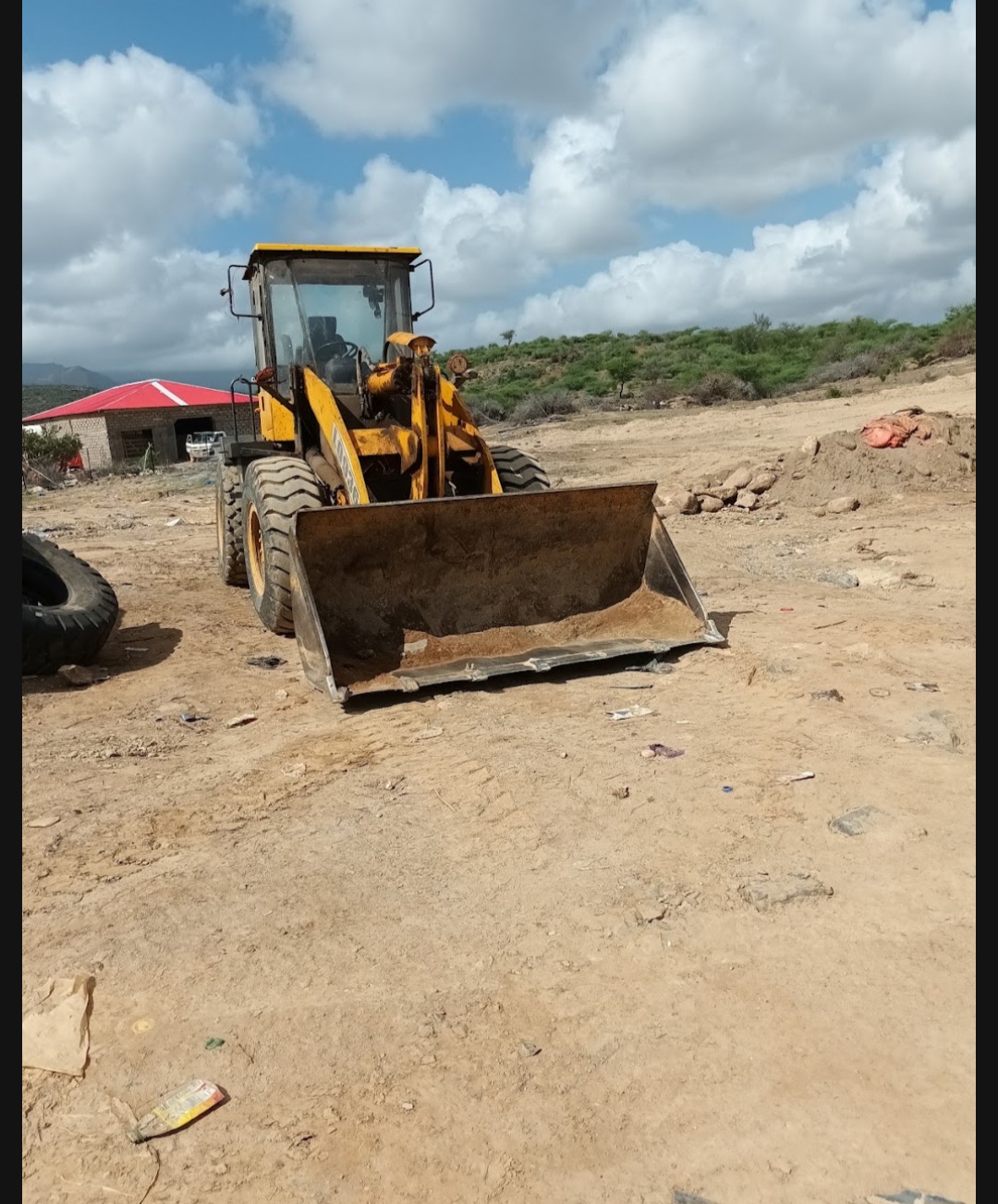
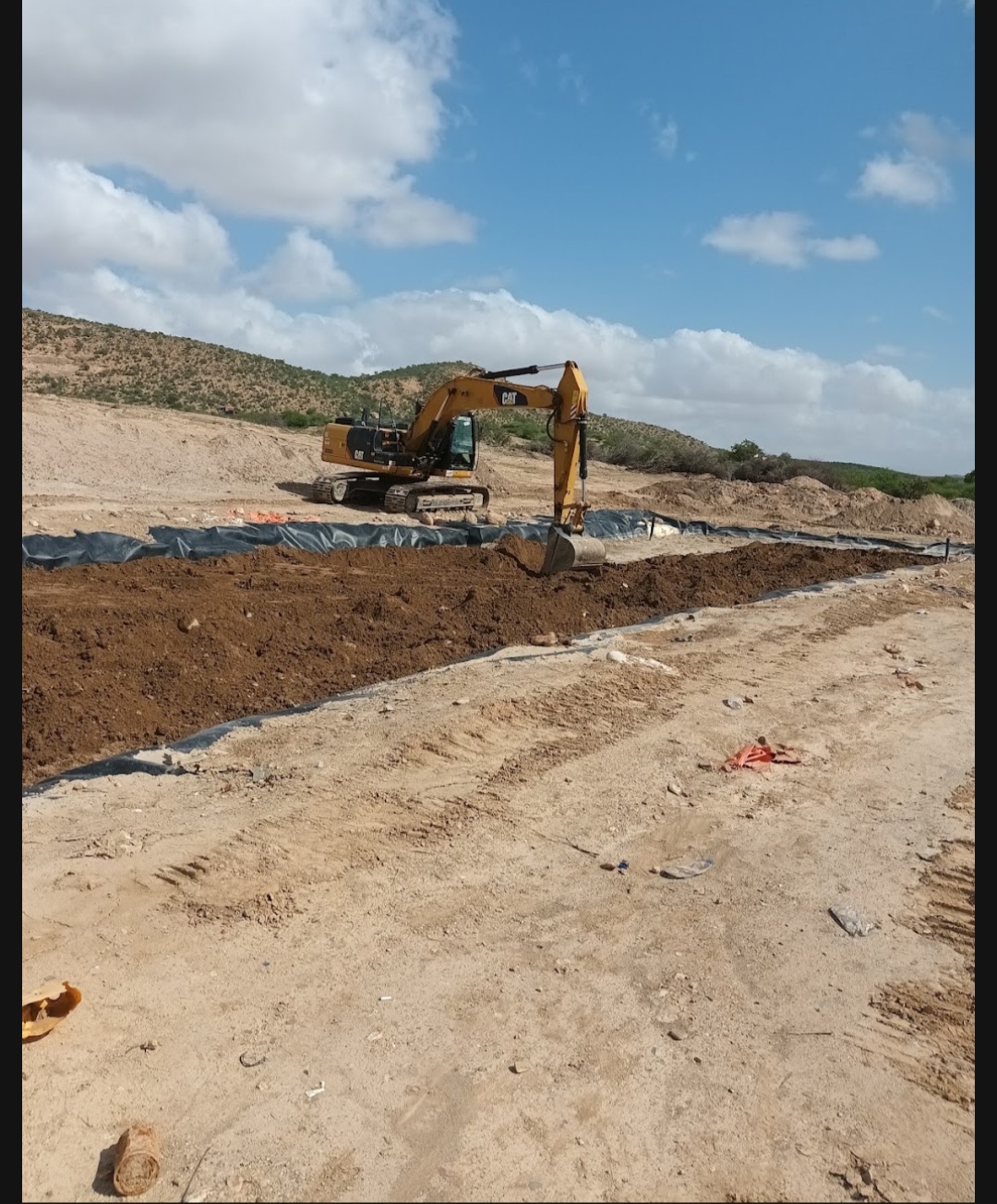
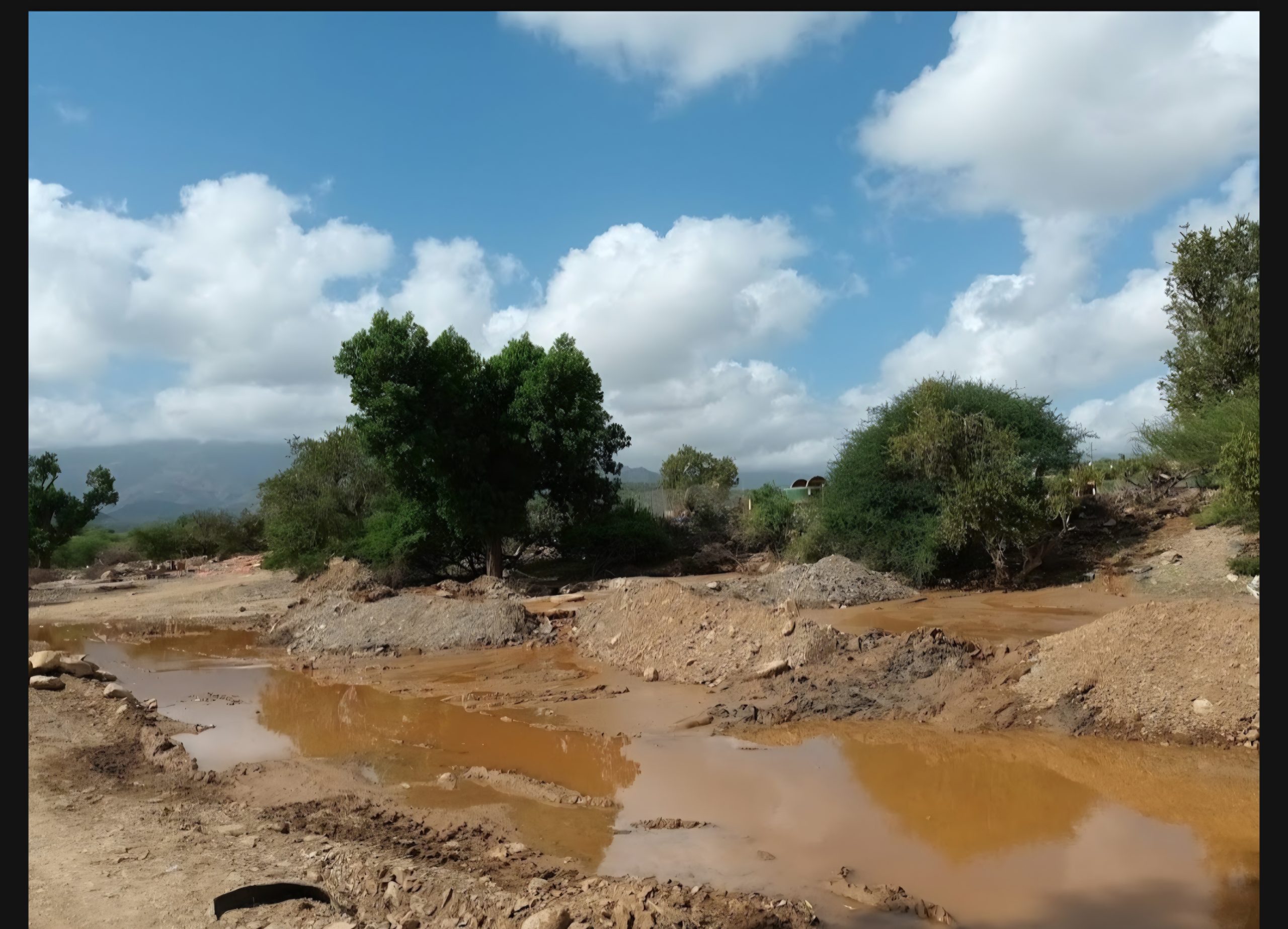
Environmental destruction / water polution in Milxo by illegal mining activities.
At the same time, women human rights defenders (WHRDs), environmental defenders and climate justice activists are
CSHRD is particularly concerned about reports of intimidation, harassment and other forms of pressure against environmental defenders. AAD’s July 2026 report identified reported risks including intimidation, online abuse, surveillance, restrictions and threats against defenders advocating for environmental protection and community rights.
Protecting Milxo’s environment requires protecting the people who defend it.
Introduction
Somalia possesses significant mineral resources that could contribute to economic development if managed through transparent, accountable and environmentally responsible systems.
However, the expansion of gold mining in Milxo has occurred amid substantial regulatory and governance gaps.
CSHRD’s fact-finding report documented concerns relating to:
- destruction of ecosystems;
- deterioration of water sources;
- destruction of grazing land;
- displacement pressures;
- inadequate environmental safeguards;
- limited community participation;
- weak mining regulation; and
- loss of potential public revenue from mineral resources.
GI-TOC’s subsequent research similarly characterized Milxo as an ungoverned mining enclave, reporting that effective regulatory oversight is limited and that gold moves through informal channels into international markets.
This situation has consequences extending beyond mining itself. It affects land, water, livelihoods, climate resilience, community rights and the safety of environmental defenders.
Milxo and the Expansion of Gold Mining
Milxo, located in the Bari region of Puntland, has experienced rapid expansion following the discovery and exploitation of commercially valuable gold deposits.
GI-TOC estimates that the settlement grew from a small cluster of buildings in 2016 to approximately 10,000–15,000 people. Its research was based on fieldwork conducted between February and April 2025, alongside documentary review, satellite imagery and open-source intelligence.
The research identified a mining economy characterized by:
- extensive informal extraction;
- weak licensing and regulatory oversight;
- limited environmental controls;
- informal transportation of gold;
- international supply chains;
- limited transparency concerning gold origin; and
- substantial flows toward Dubai.
GI-TOC reported that almost all Milxo gold exports flow to Dubai, frequently carried by couriers on commercial flights. It also found that UAE customs procedures did not consistently require documentation demonstrating origin or regulatory compliance.
These findings demonstrate why environmental and human-rights concerns in Milxo cannot be considered solely a local issue.
The UAE and the International Gold Supply Chain
The connection between Milxo and international gold markets requires greater scrutiny.
According to GI-TOC, official UAE imports of Somali gold increased from 2.8 tonnes in 2017 to more than five tonnes in 2023. The report states that Somali gold flows almost exclusively to Dubai.
This does not, by itself, establish that all gold imported into the UAE originated from Milxo, nor does it establish that five tonnes were mined in Milxo during 2025 but international report confirm that.
Nevertheless, AAD has received information citing approximately five tonnes of gold harvested from Milxo in 2025 and entering UAE-linked markets. This claim should be subjected to independent verification through production records, export documentation, customs data, supply-chain records and other reliable evidence.
The issue therefore requires:
- gold-origin verification;
- supply-chain traceability;
- transparent export records;
- licensing information;
- environmental and human-rights due diligence;
- identification of intermediaries and buyers; and
- greater transparency concerning international gold markets.
Gold entering international markets should not be separated from the environmental and human-rights conditions under which it was extracted.
Environmental Destruction in Milxo
CSHRD’s fact-finding investigation documented significant environmental concerns associated with mining activities.
Destruction of ecosystems
Mining operations have resulted in the removal of vegetation and excavation of large areas of land.
CSHRD documented:
- destruction of natural habitats;
- removal of vegetation;
- extensive excavation;
- soil erosion;
- land degradation;
- damage to fragile ecosystems;
- biodiversity loss; and
- increased desertification risks.
Without rehabilitation, damaged landscapes may remain degraded for years.
Water resources
Water is particularly important in the dry environment surrounding Milxo.
CSHRD documented community concerns involving:
- wells used for drinking water;
- groundwater resources;
- seasonal rivers and streams;
- livestock water sources;
- sedimentation; and
- possible contamination associated with mining operations.
Any contamination or depletion of water sources can have consequences for public health, livestock, food security and community survival.
Grazing land
Pastoralism remains an important livelihood for communities in the region.
CSHRD reported destruction and restriction of grazing areas, reduced livestock movement and increasing pressure on remaining pasture.
The loss of grazing land can therefore translate directly into:
environmental degradation → reduced pasture → livestock losses → reduced household income → food insecurity → increased displacement pressure.
Climate Change and Environmental Vulnerability
Mining-related degradation occurs in communities already exposed to climate-related pressures.
Somalia faces recurrent drought, water scarcity, land degradation and other climate-related stresses. Environmental damage can reduce the capacity of ecosystems and communities to withstand these shocks.
Mining-related:
- vegetation loss;
- soil disturbance;
- reduced water availability;
- habitat destruction; and
- loss of grazing resources
can therefore compound existing climate vulnerabilities.
AAD’s assessment similarly warned that environmental destruction associated with unregulated mining undermines climate resilience and increases the vulnerability of communities already affected by drought and water scarcity.
For communities dependent on pastoralism, environmental protection is also climate adaptation.
Community Rights and Livelihoods
The consequences of mining extend beyond physical environmental damage.
CSHRD documented community concerns regarding:
- loss of access to traditional land;
- pressure on ancestral lands;
- reduced access to natural resources;
- displacement;
- destruction of grazing areas;
- limited participation in decisions affecting communities; and
- inadequate protection of community interests.
Affected communities should have meaningful opportunities to participate in decisions concerning mineral extraction, land use and environmental management.
Responsible mineral development requires consultation with affected communities and mechanisms through which environmental and social impacts can be identified and addressed.
Women Environmental and Climate Justice Defenders
Women environmental and climate justice defenders are playing an important role in responding to the crisis.
Their work includes:
Community awareness
WHRDs are educating communities about:
- environmental protection;
- climate change;
- mining-related environmental impacts;
- water protection;
- land degradation;
- biodiversity;
- community rights; and
- sustainable management of natural resources.
Peaceful demonstrations
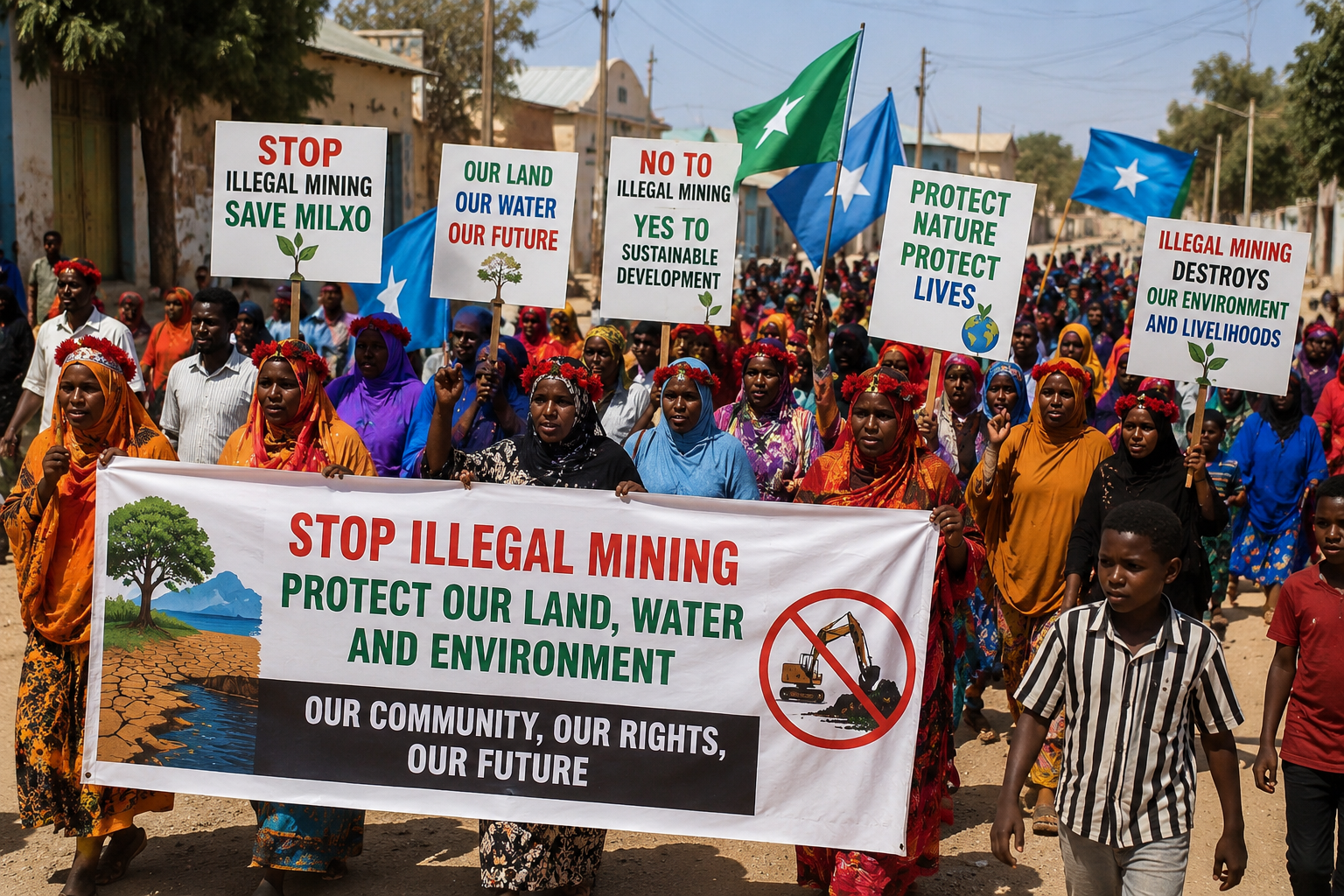
Women defenders and community members have participated in peaceful demonstrations and advocacy against destructive and unregulated mining activities.
Their demands centre on environmental protection, community rights, accountability and responsible management of natural resources.
Documentation
Environmental defenders help document:
- mining sites;
- damaged landscapes;
- affected water sources;
- loss of grazing land;
- community concerns;
- environmental changes; and
- risks facing defenders.
Advocacy
Defenders communicate environmental concerns to civil society, authorities, journalists, researchers and international partners.
This work creates evidence that can support environmental governance and accountability.
Risks Facing Environmental Defenders
Environmental defenders can face heightened risks when their advocacy challenges powerful economic interests.
AAD’s July 2026 report identified reported concerns involving:
- intimidation;
- harassment;
- online abuse;
- surveillance;
- restrictions;
- threats; and
- attempts to silence environmental advocacy.
The report also highlighted concerns affecting women environmental and climate justice defenders.
These risks must be taken seriously because environmental defenders perform a public-interest function: documenting environmental harm, informing communities and demanding accountability.
Peaceful environmental advocacy should not expose individuals to retaliation.
Mapping and Building an Environmental Justice Alliance
AAD and CSHRD recommend systematic mapping of the environmental and human-rights landscape surrounding Milxo.
This should include mapping:
People
- WHRDs;
- environmental defenders;
- community leaders;
- youth activists;
- journalists;
- lawyers;
- researchers; and
- affected pastoralists.
Places
- mining sites;
- affected settlements;
- grazing areas;
- water sources;
- environmentally sensitive areas; and
- areas experiencing displacement pressure.
Institutions
- government authorities;
- environmental agencies;
- civil society organisations;
- women’s organisations;
- humanitarian actors;
- protection organisations;
- researchers;
- regional institutions; and
- international partners.
Supply chains
- miners;
- intermediaries;
- transporters;
- exporters;
- buyers;
- refiners; and
- international markets.
Such mapping can help create an Environmental and Climate Justice Alliance for Milxo, connecting local defenders with national, regional and international protection and environmental networks.
Protection and Safeguarding Call
CSHRD call for urgent protection and safeguarding measures for WHRDs and environmental defenders working in and around Milxo.
Immediate measures should include:
- Individual and collective security-risk assessments for environmental defenders.
- Emergency protection mechanisms for defenders facing credible threats.
- Legal assistance for defenders facing detention, harassment or legal reprisals.
- Digital-security training and support for activists documenting environmental damage.
- Psychosocial support and collective-care mechanisms for WHRDs.
- Safe communication and reporting channels for threatened defenders.
- Protection of peaceful assembly and freedom of expression.
- Independent investigation of threats or attacks against environmental defenders.
- International monitoring and visibility concerning the situation of defenders.
- Referral mechanisms connecting defenders with established protection organisations.
- Support for women-led environmental organisations and grassroots initiatives.
- Protection protocols for journalists and researchers documenting mining-related environmental impacts.
Responsible Mining and Environmental Governance
AAD does not oppose legitimate economic development or responsible mineral investment.
Rather, mineral development should comply with environmental, human-rights, transparency and community-participation standards.
Somalia’s mineral sector requires:
- transparent licensing;
- environmental impact assessments;
- effective monitoring;
- mine-site rehabilitation;
- water protection;
- community consultation;
- public disclosure of mining agreements;
- transparent taxation and revenue management;
- supply-chain traceability; and
- effective accountability mechanisms.
The objective should be to ensure that mineral resources contribute to sustainable development without transferring environmental and social costs to local communities.
Recommendations
To the Federal Government of Somalia
AAD recommends that the Federal Government:
- strengthen the national framework governing mineral resources;
- establish clear environmental standards for mining;
- require appropriate environmental impact assessments;
- strengthen monitoring of mineral extraction;
- investigate reported illegal and destructive mining;
- improve transparency in licensing and mineral exports;
- protect community rights;
- establish mechanisms for meaningful community participation;
- protect environmental and human-rights defenders; and
- strengthen mechanisms for tracking Somalia’s mineral exports.
To Puntland Regional Authorities
Authorities should:
- strengthen environmental monitoring around Milxo;
- ensure compliance with applicable mining requirements;
- protect community land and water resources;
- prevent environmentally destructive extraction;
- support restoration of degraded land;
- facilitate meaningful community consultation;
- protect peaceful environmental advocacy; and
- investigate credible reports of threats against environmental defenders.
To UAE Authorities and Gold-Market Actors
Given the documented flow of Somali gold to Dubai, UAE authorities and gold-market actors should:
- strengthen origin verification;
- improve supply-chain traceability;
- conduct enhanced due diligence on high-risk gold;
- scrutinise documentation accompanying Somali gold;
- identify the source and intermediaries involved in gold shipments;
- ensure compliance with applicable responsible-sourcing standards; and
- cooperate with investigations into illicit mineral flows.
The documented increase in UAE imports of Somali gold—from 2.8 tonnes in 2017 to more than five tonnes in 2023—underscores the importance of such measures.
To International Partners
International organisations and donors should:
- support community-led environmental monitoring;
- fund environmental restoration;
- strengthen environmental governance;
- support WHRD protection programmes;
- provide emergency assistance to threatened defenders;
- support independent research into mineral supply chains;
- strengthen climate-resilience programmes; and
- support women-led environmental and climate justice initiatives.
To Mining Companies and Investors
Companies operating in or sourcing from the Milxo area should:
- conduct human-rights and environmental due diligence;
- obtain appropriate authorisations;
- consult affected communities;
- prevent environmental contamination;
- protect workers and surrounding communities;
- rehabilitate degraded mining areas; and
- publicly disclose relevant environmental and social safeguards.
A Call for International Attention
Milxo’s gold economy demonstrates how a local environmental crisis can become connected to international markets.
The chain can be understood as:
Mining site → environmental degradation → community impact → defender advocacy → international gold supply chain.
Consequently, responsibility cannot rest solely with communities living around mining sites.
Those involved in financing, purchasing, transporting, refining or trading gold originating from high-risk areas should exercise appropriate due diligence and ensure that supply-chain practices do not contribute to environmental destruction or human-rights abuses.
Conclusion
Milxo stands at an important crossroads in Somalia’s natural-resource governance.
The area’s mineral wealth could contribute to legitimate economic opportunity and development. However, CSHRD and AAD’s findings and the available independent research demonstrate significant concerns surrounding environmental degradation, weak oversight, community impacts and international gold flows.
The environmental consequences—including destruction of vegetation, degradation of land, pressure on water resources and loss of grazing areas—have implications for livelihoods and climate resilience.
At the same time, women environmental and climate justice defenders are working peacefully to educate communities, document environmental damage, advocate for accountability and defend the rights of affected communities.
Their work must be protected.
CSHRD therefore calls upon Somali authorities, Puntland institutions, international partners, civil society, responsible investors and gold-market actors to strengthen environmental governance, improve mineral supply-chain transparency, protect affected communities and ensure the safety of environmental and climate justice defenders.
The reported 2025 figure of approximately five tonnes of gold from Milxo entering UAE-linked markets requires international inquiry by the UN. However, independently documented evidence already demonstrates substantial Somali gold flows to the UAE and significant weaknesses in supply-chain due diligence.
The international community should therefore treat Milxo not simply as a mining story, but as an interconnected issue of environmental protection, climate resilience, community rights, responsible natural-resource governance and defender protection.
Protect the land. Protect the water. Protect the communities. Protect the defenders.
