
Somalia: Report – Technology, Power, and the Exploitation of Personal Data in Fragile Contexts.
Introduction

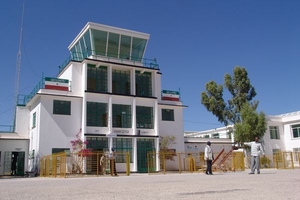 Hargeisa Interntaional Airport
In the digital age, technology has become deeply embedded in governance, security, and economic systems. While it offers opportunities for efficiency and innovation, it has also enabled governments and corporations to expand their power in unprecedented ways. Increasingly, these actors are accused of exploiting individuals through intrusive data collection, opaque surveillance systems, and the commodification of personal information. Such practices threaten fundamental freedoms, human dignity, and democratic accountability.
Organizations such as (PI) have emerged to challenge these abuses, advocating for transparency, accountability, and the protection of privacy as a core human right.
The Expansion of Surveillance Power
Modern surveillance technologies—including biometric systems, facial recognition, and mass data analytics—allow states and private actors to monitor populations at scale. These tools are often justified under the guise of national security, migration control, or counterterrorism. However, in many cases, they operate without adequate legal safeguards or oversight.
The integration of biometric systems—such as fingerprint scanners and iris recognition—into public infrastructure like airports, border controls, and identification systems has created vast databases of sensitive personal information. When improperly managed, these systems become tools of control rather than protection.
Case Study: Somalia and its Northern Region of Somaliland
In fragile and conflict-affected regions such as and , the risks associated with technological exploitation are particularly acute.
Deployment of Biometric Surveillance
Authorities in these regions have reportedly implemented biometric data collection systems at key transit points, including airports. These systems capture:
– Fingerprints
– Iris (eye) scans
– Facial recognition data
While such measures are often introduced to enhance security and border management, concerns arise when:
– Individuals are not informed about how their data will be used
– Consent is not meaningfully obtained
– Data retention policies are unclear or non-existent
Data Sharing with Third Parties
There are credible concerns that collected biometric data is being shared with third-party actors, including foreign governments or private contractors. In some cases, this data exchange may be tied to financial or political incentives.
This raises serious questions about:
– Data sovereignty: Who owns and controls citizens’ data?
– Accountability: What legal frameworks govern these transfers?
– Exploitation: Are vulnerable populations being used as data sources without protection?
Human Rights Implications
The alleged practices may violate international human rights standards, particularly:
– The right to privacy (Article 12 of the Universal Declaration of Human Rights)
– The right to dignity and autonomy
– Protections against arbitrary or unlawful interference
The absence of robust data protection laws in Somalia exacerbates these risks, leaving citizens with little recourse in cases of abuse.
Corporate Complicity and Profit Motives
Private corporations often design, supply, and maintain surveillance technologies. In doing so, they may:
– Enter into opaque contracts with governments
– Prioritize profit over ethical considerations
– Fail to conduct adequate human rights due diligence
This creates a system where corporations benefit financially from invasive practices, while individuals bear the consequences. In fragile states, weak regulatory frameworks make it easier for companies to operate without scrutiny.
Broader Threats to Democracy and Human Dignity
The unchecked use of surveillance technologies contributes to:
– Erosion of civil liberties: Constant monitoring discourages free expression and dissent
– Normalization of surveillance: Intrusive practices become accepted as standard
– Power imbalances: Governments and corporations gain disproportionate control over individuals
In contexts like Somalia, where governance structures are still evolving, such practices risk entrenching authoritarian tendencies and undermining public trust.
The Role of Advocacy and Accountability
Organizations like play a crucial role in:
– Investigating abuses
– Raising public awareness
– Advocating for stronger legal protections
– Holding governments and corporations accountable
Their work highlights the importance of embedding human rights principles into technological development and deployment.
Recommendations
To address these challenges, the following measures are essential:
Legal and Policy Reforms
– Establish comprehensive data protection laws aligned with international standards
– Ensure independent oversight of surveillance practices
– Require transparency in government contracts with technology providers
Corporate Responsibility
– Enforce mandatory human rights due diligence for technology companies
– Prohibit the export of surveillance technologies to high-risk contexts without safeguards
Public Awareness and Consent
– Inform individuals about data collection practices
– Ensure consent is freely given, specific, and informed
International Oversight
– Strengthen global mechanisms to monitor cross-border data transfers
– Support civil society organizations in documenting abuses
Conclusion
The intersection of technology, power, and governance presents both opportunities and risks. In contexts such as Somalia and its norther region of Somaliland, the deployment of biometric surveillance systems without adequate safeguards risks transforming tools of security into instruments of exploitation.
Protecting privacy is not merely a technical issue—it is a fundamental human rights imperative. Without accountability, transparency, and strong legal protections, the misuse of technology will continue to undermine democracy, erode dignity, and compromise the very freedoms it promises to enhance.
This act constitutes violation against basic human rights and human dignity according to the:
a. Universal Declaration of Human Rights (UDHR)
Article 12
Protects against arbitrary interference with privacy, family, home, or correspondence.
Potential breach:
Mass biometric data collection without consent
Sharing personal data with unknown third parties
b. International Covenant on Civil and Political Rights (ICCPR)
(Somalia is a party)
Article 17 – Right to Privacy
Article 19 – Freedom of expression
Potential breach:
Surveillance systems that chill free movement and expression
Arbitrary or unlawful data collection and transfer
c. African Charter on Human and Peoples’ Rights
Article 4 – Human dignity
Article 5 – Respect for dignity and integrity
Article 9 – Right to receive information
Potential breach:
Lack of transparency about how data is used
Exploitation of citizens’ biometric identity
d. Data Protection Principles (Soft Law Standards)
Even where no domestic law exists, global standards apply:
Legality (must be based on law)
Necessity & proportionality
Informed consent
Purpose limitation
—-
Report by John Paul
